Causes of Gynecomastia: Why Removing Glandular Tissue Matters
Author : Dr. Ki-hun YangFebruary 19, 2026 at 05:56 PM 577
Causes of Gynecomastia: Why Removing
Glandular Tissue Matters
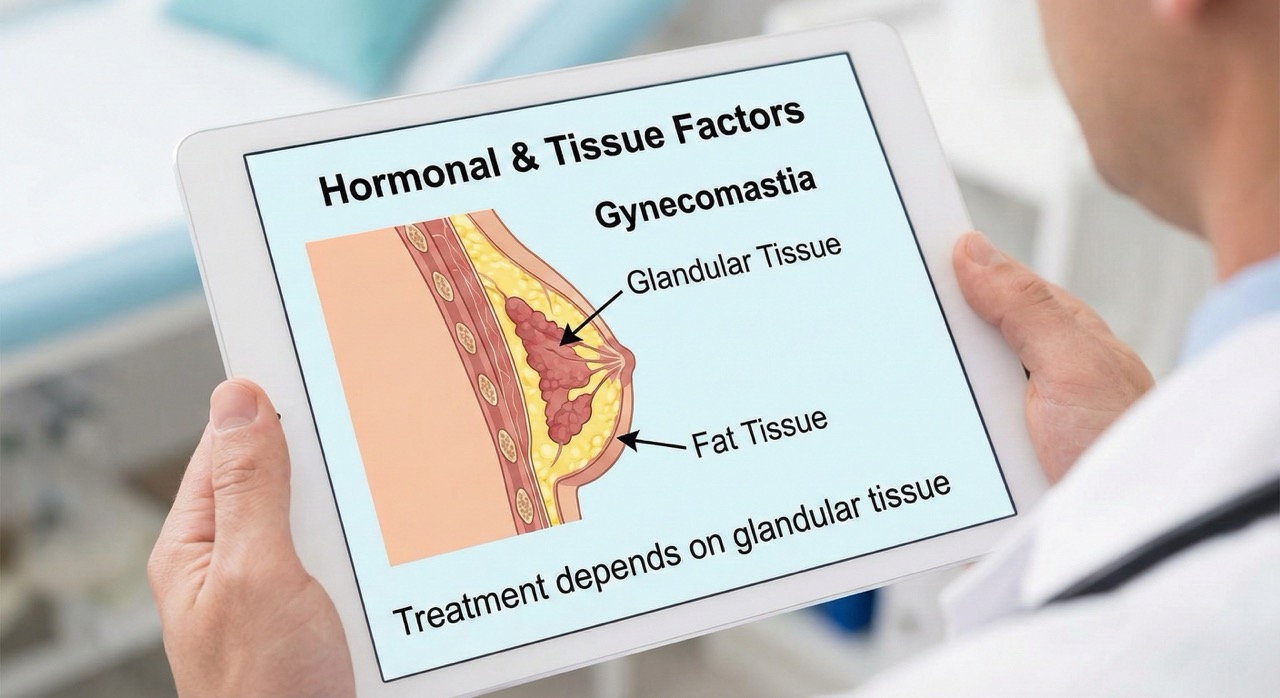
1. Why Does Gynecomastia Occur?
- Temporary hormonal fluctuations during puberty
- Increased aromatase enzyme activity due to increased body fat
- Certain medications (anti-androgens, some antidepressants, steroids, etc.)
- Systemic conditions such as liver disease or thyroid disorders
2. The Difference Between Fat and Glandular Tissue
<Fat-type chest> <Glandular gynecomastia>
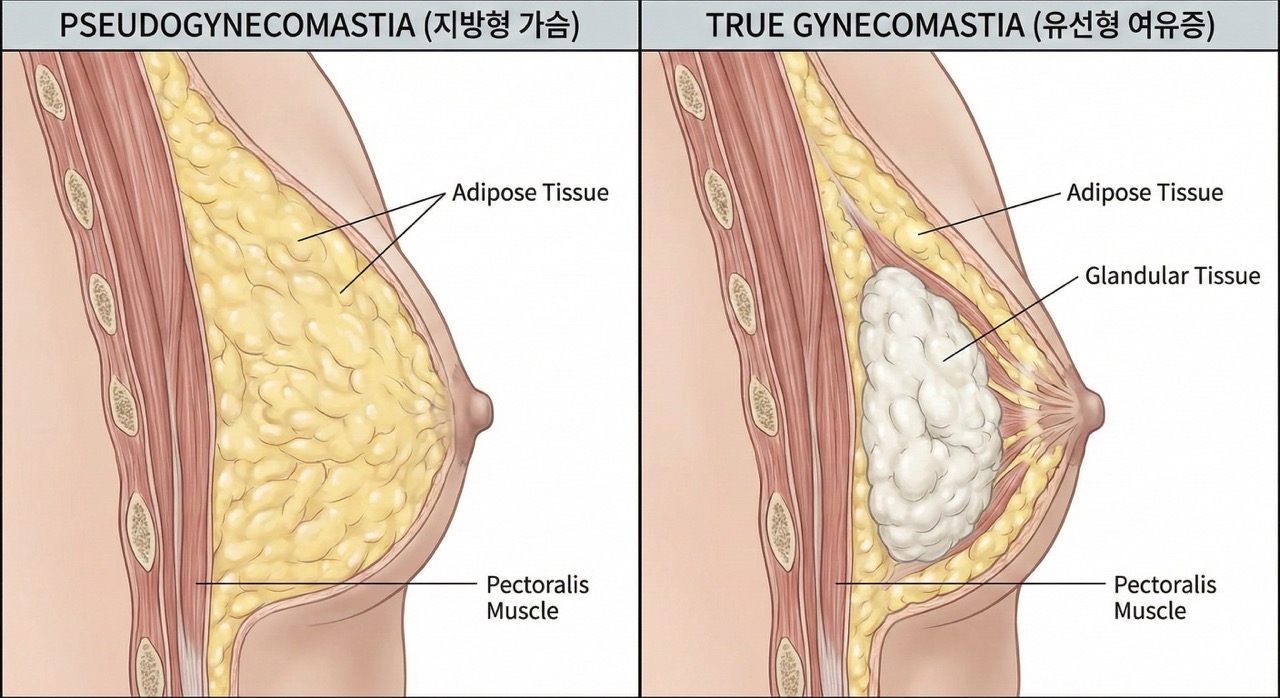
Fat-type chest (pseudogynecomastia)
Glandular gynecomastia (true gynecomastia)
3. Why Removing Glandular Tissue Matters in Surgery
The Importance of an Accurate Diagnosis
- Visual examination, palpation, and imaging performed together
- Assessment of how fat and glandular tissue are distributed
- Checking hormone status and screening for systemic conditions
References
- Gynecomastia review (etiology, mechanism, course) — Braunstein GD. Gynecomastia. N Engl J Med. 2007;357(12):1229–1237. doi:10.1056/NEJMcp070677
- Drug-induced gynecomastia — Bowman JD, et al. Drug-induced gynecomastia. Pharmacotherapy. 2012;32(12):1123–1140. doi:10.1002/phar.1138
Read next — Doctor Column
All Doctor Columns →Customer Story Column
All Customer Story Columns →
Key Background
- · Top of Class — Medicine / Dentistry / Pharmacy / Korean Medicine, Wonkwang University
- · Surgical Residency, Asan Medical Center, Seoul
View Full Profile ›
"The final answer for complex and revision surgery — the surgeon who set the standard for male aesthetic surgery in Korea"
"The harder the surgery, and the more failed operations a patient has behind them, the more the outcome rests on the surgeon's experience. As the founder of Trueman, I draw on know-how built over tens of thousands of cases to offer answers for the complex operations and difficult revisions that other clinics have turned away."
- · Clinical Advisor, Plastic Surgery, Yanda International Hospital (China)
- · Certified Surgeon, AMS (USA) / Coloplast
- · Designated Training Hospital Director for Domestic and International Physicians, NEWPONG
- · Designated Training Hospital Director for Korea & Asia, APOLEX
- · Member, Korean Society for Sexual Medicine and Andrology (KSSMA)
- · Member, Korean Society of Obesity and Body Contouring
- · Member, Korean Society for the Study of Liposuction (KSSL)
- · Member, International Society of Obesity and Body Contouring