A Plan to Make It Look More Natural Through Exercise
Author : Dr. Jin-woo JunNovember 23, 2026 at 10:34 AM 0
Truman Customer Story Column
A Plan to Make It Look More Natural Through Exercise

Read next — Customer Story Column
All Customer Story Columns →- "When the Doctor Explained the Design"2026.11.23
- The Worry That Something Might Go Wrong2026.11.23
Doctor Column
All Doctor Columns →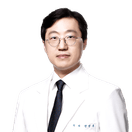
Key Background
- · Board Certified Surgeon / Breast Surgery Fellow
- · M.S. in Medicine
View Full Profile ›
"The master who safeguards surgical quality at the Gangnam branch — a specialist in precise contour reconstruction"
"As lead doctor of the Gangnam branch, I operate so that every surgery meets Trueman's strict standards. With precise reconstructive technique that corrects asymmetry and uneven contours, I help patients regain the masculine confidence they had lost."
- · Surgical Residency, National Medical Center
- · Breast Surgery Fellowship, Korea Cancer Center Hospital (KIRAMS)
- · Lifetime Member, The Korean Surgical Society
- · Member, Korean Breast Cancer Society
- · Member, The Korean Surgical Ultrasound Society (KSUS)
- · Lifetime Member, Korean Society for the Study of Obesity